Optical time and frequency transfer
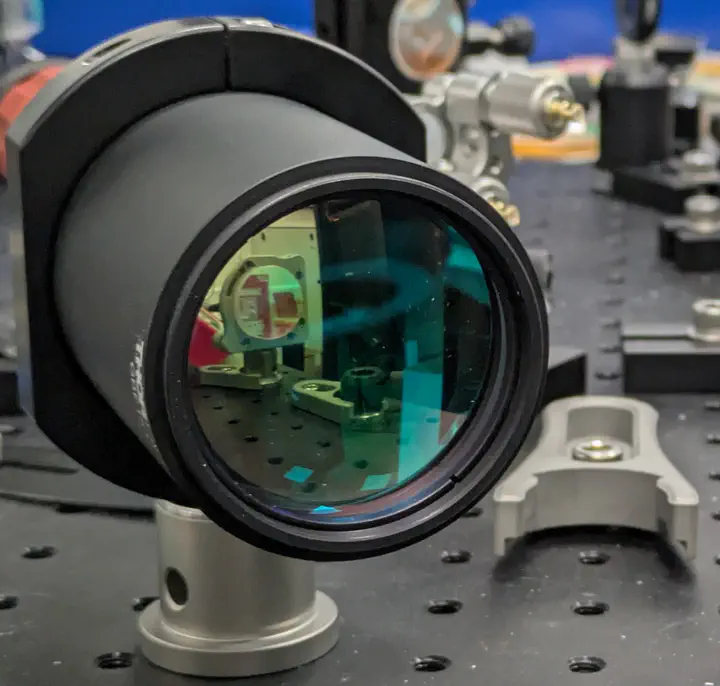
Optical time and frequency transfer
Time and frequency synchronisation underpins much of modern technology and science, from supporting global communications networks, to synchronising radio telescopes and enabling tests of fundamental physics. Ideally, the synchronisation should faithfully transfer clock signals throughout the network without loss of timing stability or accuracy. Traditional RF and microwave synchronisation techniques are no longer sufficient to support the performance of the world’s best atomic clocks. Instead, links based on optical transmission are required. While optical fibre links can deliver frequency transfer with fractional instabilities below 10⁻¹⁹, their reach is limited by physical infrastructure. Free-space optical links offer a route to extend high-accuracy time and frequency references to remote or mobile platforms, including observatories, space systems, and field-deployed experiments.
This project will investigate time and frequency transfer techniques for free-space optical links that can maintain high accuracy, low phase noise, and high stability in realistic environmental conditions. The project combines frequency metrology, optical design, atmospheric physics, and control systems engineering. You will develop an optical time and frequency transfer system and carry out precision characterisation both in the lab and field deployed demonstrations. You will be part of a collaborative research programme with the National Physical Laboratory, working with the team based in NPL’s innovation lab located at Strathclyde.
- Availability: Open
- Start date: October 2026
- Contact: Dr Rachel Ofer