Nonlinear Photonics
The research covers several aspects of of nonlinear photonics and nonlinear quantum dynamics with fundamental and applicative aspects.
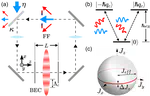
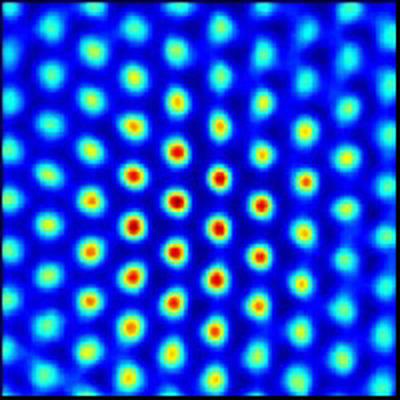
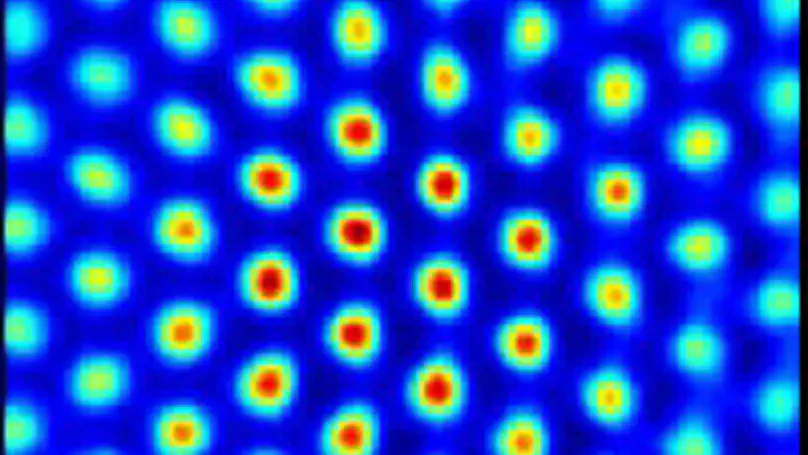
Self-organization in cold and ultracold atoms due to light-mediated interactions between atoms via feedback from a single mirror is explored to study complex phases and phase transitions including supersolids. A further activity is spontaneous magnetic ordering not only of dipolar but also quadrupolar degrees of freedom and potential connections to corresponding phases in condensed matter physics. These activities have strong interdisciplinary aspects being connected to self-organization phenomena in nonequilibrium system ubiquitous in Nonlinear and Complexity Science, technology and nature. The work is performed in close cooperation with the Computational Nonlinear Optics and Quantum Optics Group within the Optics Division.
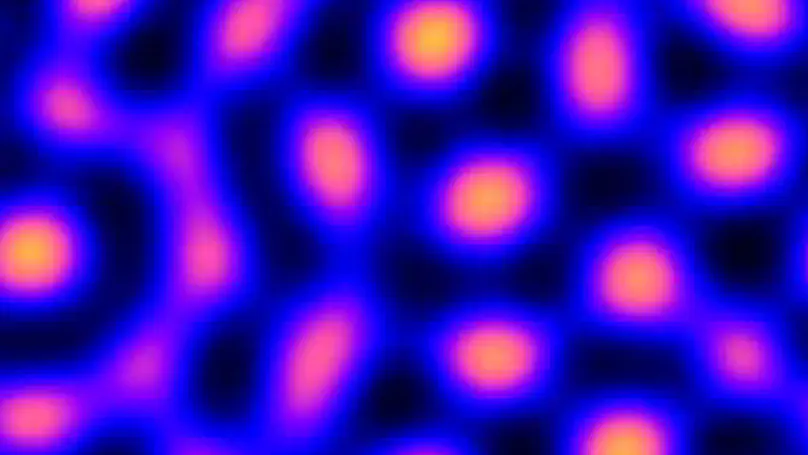
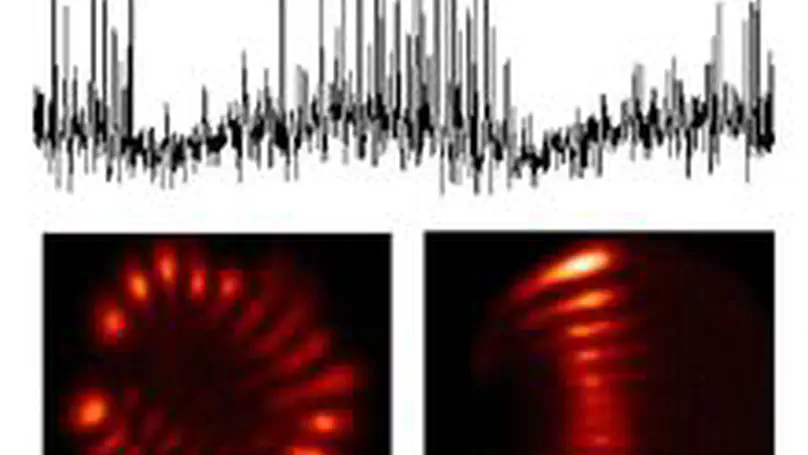
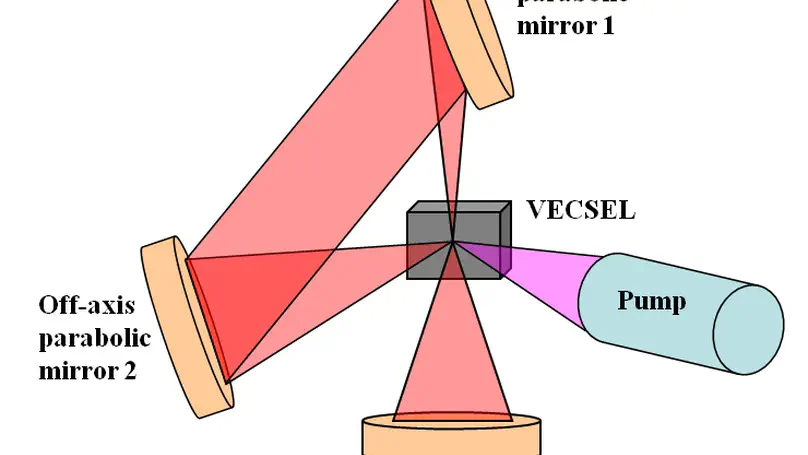
In semiconductor lasers, we investigate their highly nonlinear dynamics, especially in vertical-cavity devices like VCSELs and VECSELs, with a focus on polarization dynamics and spintronics on the one hand and transverse mode structure and solitons on the other. This aims in particular on the understanding of the complex nonlinear processes determining (and partially limiting) the performance of semiconductor-based photonic devices and lasers, their control and the utilization of nonlinearities for applications. Recently, I became interested in thermodynamics aspects like photon condensation providing a further fruitful link between my research fields.
Former projects
Latest News
A colloboration between the Ultracold Matter and Quantum Technology (T. Ackemann, E. Haller) and Computional Nonlonerar and Quantum Optics Group (G. Robb, P. Kirton) obtained funding from EPSRC for the investigation of Supersolids and quantum droplets via light mediated interactions.

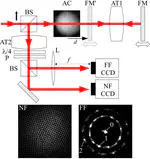
In a collaboration with the INPHYNI in Nice and the TU Vienna which just appeared in Physical Review A we are looking now at the interplay of diffraction within the atomic cloud and diffraction in vacuum. It turns out that for most situations it is sufficient to look at the linear Talbot effect but things get more involved, if one puts the mirror “into the cloud”. If you are curious, how to do this and what the resulting length scales are, please look at Phys. Rev. A 111, 063506.
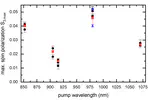
New paper in Applied Physics Letter on how the efficiency of introducing a spin polarization in InGaAs quantum dots depends on pump wavelength. Unfortunately, the wavelengths for best spin polarization and best quantum efficiency are not the same. If you are interested, please look at Appl. Phys. Lett. 126, 191102 (2025).
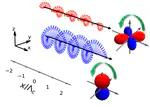
Spontaneously Sliding Multipole Spin Density Waves in Cold Atoms reported in Physical Review Letters
Generating Multiparticle Entangled States by Self-Organization of Driven Ultracold Atoms reported in Physical Review Letters